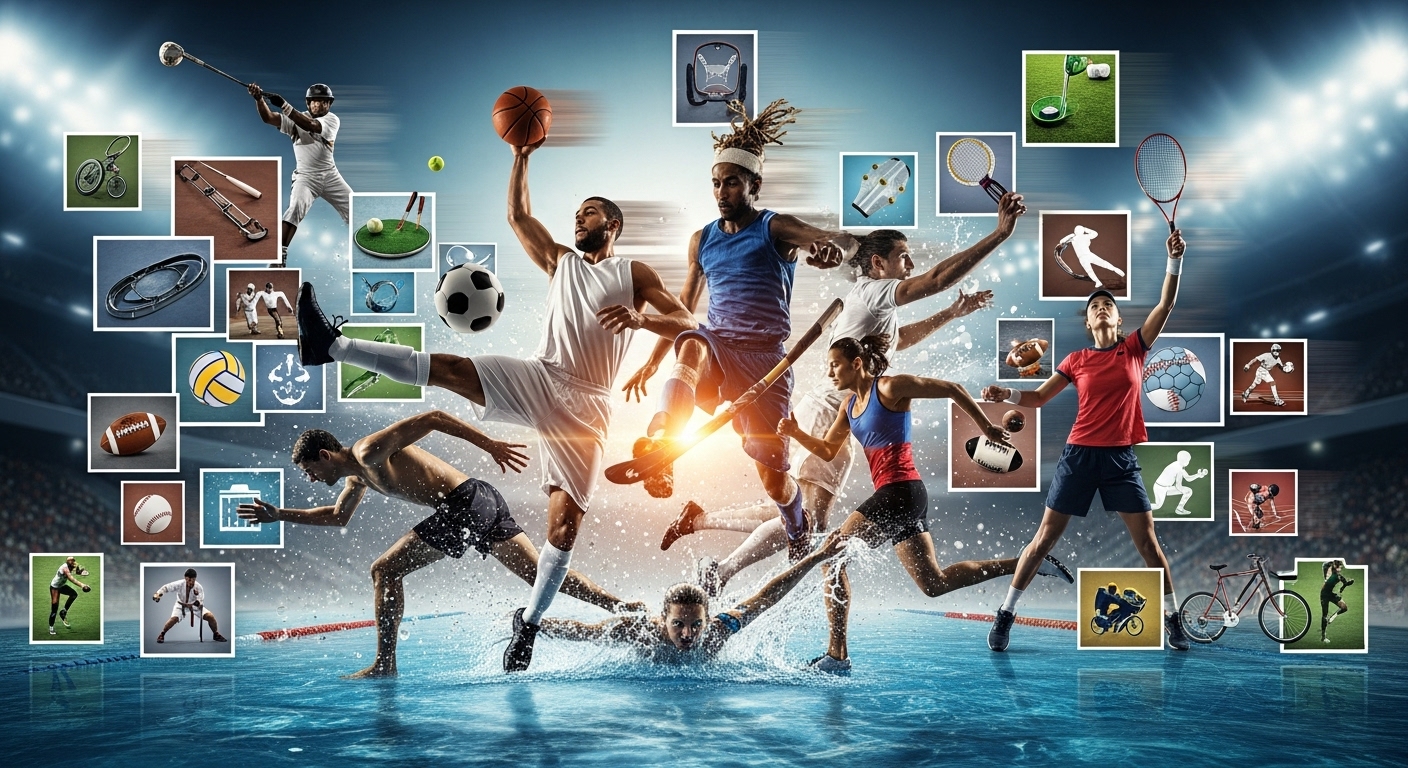
Sports have always been an integral part of human civilization, playing a role in cultural development, personal identity, and social structures. Whether it’s the ancient games of Greece, the modern-day spectacle of global competitions, or the local community leagues, sports have evolved into something more than just a physical activity. They are a mirror of human aspirations, challenges, and accomplishments. In this blog post, we will explore the multi-dimensional influence of sports on society, history, and culture, as well as how they continue to shape and enrich our lives.
The Genesis of Sports: From Rituals to Competitions
The roots of sports can be traced back to ancient civilizations, where physical activities were initially tied to religious ceremonies, military training, and physical prowess. In the ancient world, sports were not simply recreational; they had significant cultural, political, and social meanings. The Egyptians practiced a variety of sports, including archery, swimming, and wrestling, often as part of military training. But it was in ancient Greece where the first true organized sports competitions began to take shape.
The Greeks are best known for founding the Olympic Games in 776 BCE, a festival dedicated to honoring the god Zeus. These early Olympics featured events such as running, wrestling, and chariot racing, and athletes competed not for material rewards but for honor and glory. The Olympics embodied the Greek ideals of physical and mental excellence, fostering a sense of unity among the city-states, and establishing the foundation for the world’s most famous sporting event today.
Roman Contributions: The Rise of Spectator Sports
As the Roman Empire expanded, sports began to take on a more spectacle-driven nature. While the Greeks emphasized the individual athlete’s quest for personal achievement, the Romans created sports events for mass entertainment. Gladiatorial games, chariot races, and venationes (animal hunts) became the most popular forms of entertainment for the Roman populace. The Colosseum in Rome stands as a monumental symbol of this era, where the rich and poor alike gathered to witness these grand spectacles.
Roman sports, while violent and often brutal, served not only as entertainment but also as a means for the emperors to demonstrate their power and control over the populace. The gladiators, often slaves or prisoners of war, were forced to fight to the death, creating a spectacle that distracted the masses from political unrest or social instability. These forms of sport, albeit violent, helped develop the idea of sports as large-scale entertainment.
Medieval and Renaissance Sports: A Shift in Purpose
With the fall of the Roman Empire, sports in Europe underwent a significant transformation. During the Medieval period, activities like jousting, archery, and sword fighting became more symbolic, often tied to military readiness or the display of nobility. Knights would engage in tournaments to showcase their skill and honor, and these events were seen as a vital part of chivalric culture. They were often closely linked to social class, with the nobility participating in high-profile events while peasants engaged in simpler, more practical forms of physical activity.
The Renaissance, which sparked a renewed interest in the human body, intellect, and creativity, also brought about a transformation in the world of sports. This era saw the birth of many modern sports, including soccer, cricket, and tennis, which began to take shape in their modern forms. In England, soccer evolved from a rough game played in villages into a more structured activity with a set of rules. This period also marked the founding of many of the world’s first sports clubs, including the Marylebone Cricket Club (MCC), which was established in 1787 and played a key role in formalizing the rules of cricket.
The Industrial Revolution: The Rise of Organized Sports
The Industrial Revolution, which began in the late 18th century, drastically changed the way people lived and worked. With the shift from agrarian economies to industrialized cities, people began to seek new forms of entertainment and leisure activities. The rise of factories, mass production, and improved transportation led to the creation of more organized and professionalized sports leagues.
The formation of sports clubs became more common, and competitions began to follow a more structured format. This period saw the creation of several major sporting organizations, including the English Football Association in 1863, which standardized the rules of soccer. The establishment of national and international competitions, such as the FA Cup, contributed to the commercialization of sports and helped establish sports as a regular form of entertainment for people from all walks of life.
The Industrial Revolution also brought with it increased media coverage of sporting events. Newspapers began to report on the latest scores, player performances, and game strategies, allowing fans to follow sports teams and athletes even if they were unable to attend the events in person. This media coverage laid the groundwork for the global phenomenon that sports would become in the following century.
Sports in the Modern Era: Globalization and Commercialization
The 20th century saw the rapid globalization and commercialization of sports, fueled by the rise of mass media and, later, the internet. Sports events such as the FIFA World Cup, the Summer and Winter Olympics, the Super Bowl, and the UEFA Champions League became more than just athletic competitions; they became global spectacles watched by millions of fans across the world.
With the development of television in the mid-20th century, sports reached unprecedented levels of visibility. The 1960s marked the beginning of televised sports, with major events being broadcasted to homes around the globe. By the 1980s and 1990s, the explosion of satellite television and the internet made it possible to follow almost any sport in real-time, regardless of geographic location.
Along with increased visibility came increased commercialization. Sports became a multi-billion-dollar industry, driven by advertising, sponsorships, and broadcasting rights. Athletes, too, became global superstars, with endorsement deals turning them into brands in their own right. Companies like Nike, Adidas, and Under Armour became synonymous with sports, investing heavily in marketing and sponsorship to promote their products and connect with fans.
The Role of Sports in Society: More Than Just Games
Beyond the competitive and entertainment aspects, sports play a vital role in shaping social norms, identities, and values. Throughout history, sports have been a way for individuals and communities to come together, foster a sense of unity, and celebrate cultural identities. They provide a platform for people to demonstrate perseverance, teamwork, and resilience.
Athletes have often been at the forefront of social change. The civil rights movement in the United States, for example, was heavily influenced by prominent African American athletes such as Jackie Robinson, Muhammad Ali, and Jim Brown, who used their platform to fight for racial equality and justice. More recently, athletes like Colin Kaepernick, Serena Williams, and LeBron James have used their influence to advocate for social justice, gender equality, and political activism.
Sports also have a profound impact on youth development, teaching valuable life skills such as discipline, leadership, and teamwork. Youth sports programs offer opportunities for children to develop physically and socially, fostering a sense of community and belonging. They also provide an avenue for young people to escape negative influences, promoting healthy lifestyles and a sense of purpose.
The Future of Sports: Innovation, Technology, and New Frontiers
As we move further into the 21st century, the future of sports promises even more change and innovation. Technology continues to reshape how we experience sports, both for the athletes on the field and the fans in the stands. Advances in wearable technology allow athletes to track their performance in real-time, while virtual reality (VR) and augmented reality (AR) are opening new possibilities for fans to experience games from different perspectives.
Data analytics is another area where sports are undergoing a transformation. Teams are increasingly relying on sophisticated algorithms and performance metrics to optimize training, strategy, and player development. The rise of eSports, which refers to competitive video gaming, represents another frontier in the sports world, attracting millions of fans and creating new opportunities for sponsorships, media coverage, and monetization.
Moreover, as global issues like climate change and sustainability continue to dominate the conversation, the sports world is beginning to take action. Many major sports organizations are focusing on reducing their environmental footprint, incorporating sustainable practices into their operations, and raising awareness about environmental issues through their platforms.
Conclusion: The Enduring Power of Sports
Sports are much more than just games or competitions; they are an essential part of human culture and society. From their ancient origins to the modern global spectacle they have become today, sports have the power to inspire, unite, and challenge us. They reflect our highest ideals and our most pressing issues, offering us a way to understand the world around us and connect with others in profound and meaningful ways.
As we look to the future, sports will continue to evolve, adapting to new technologies, new social dynamics, and new forms of entertainment. Yet one thing is certain: the universal appeal of sports, with their ability to inspire greatness and foster a sense of community, will remain unchanged.