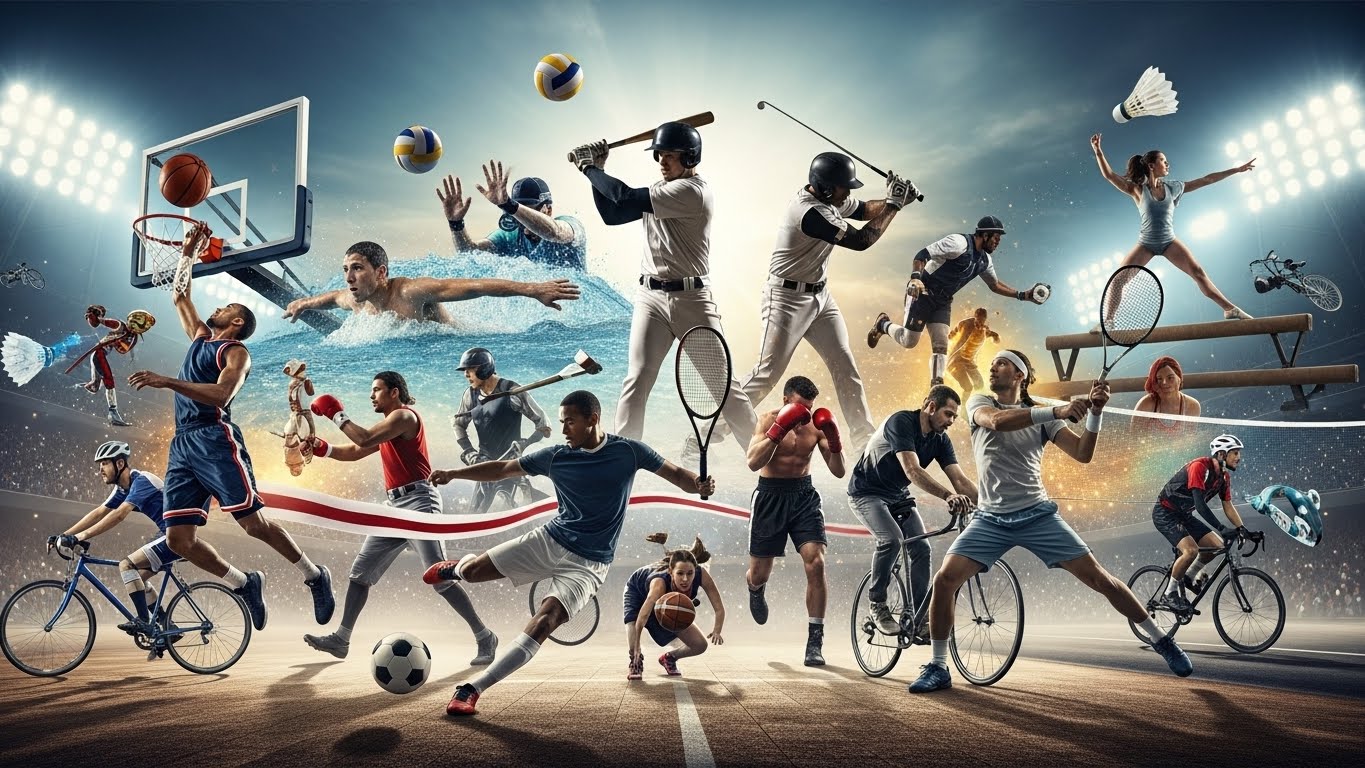
Sports are more than just games. They are a reflection of human spirit, resilience, and the universal desire to achieve greatness. From ancient civilizations to modern-day global events, sports have continuously evolved, influencing societies and bringing people together. Over time, sports have transcended their traditional role as mere competition, becoming a powerful vehicle for social change, economic growth, and global entertainment. In this post, we will explore the fascinating journey of sports, from their ancient origins to their current status as global spectacles, and examine how they are shaping the future of entertainment and society.
The Origins of Sports: Rooted in Ancient Culture and Rituals
The history of sports can be traced back to ancient civilizations where they were often intertwined with religious practices and societal rituals. Some of the earliest evidence of sports dates back to the Egyptian, Greek, and Chinese cultures. In Egypt, physical activities such as running, wrestling, and archery were depicted in hieroglyphics, showcasing that even in antiquity, sports were an important part of life.
The ancient Greeks are credited with formalizing sports with the establishment of the Olympic Games in 776 BCE. These games, which were held every four years in Olympia, were not only a means of competition but also a way to honor the gods. Events such as foot races, chariot races, and wrestling became the foundation of what we now recognize as the Olympics. The Greeks viewed sports as a way to showcase physical strength, mental discipline, and cultural unity.
Similarly, ancient civilizations like the Romans and the Chinese contributed to the development of competitive sports. Gladiator battles in ancient Rome became the ultimate test of strength and courage, while the Chinese developed traditional sports such as archery, martial arts, and even early versions of soccer. Each of these societies used sports as a way to celebrate their cultures, unify people, and demonstrate prowess.
The Transition to Modern Sports: Formalization and Standardization
As the centuries passed, sports continued to evolve, particularly in Europe, where the modern forms of many sports were established. The 19th century marked a critical turning point in the development of contemporary sports, largely due to the rise of the Industrial Revolution. With urbanization, increasing leisure time, and the development of mass communication, people were able to organize and formalize sports in ways that hadn’t been possible before.
The creation of modern football (soccer) is one of the clearest examples of this transformation. The codification of the rules of football in 1863, with the formation of The Football Association in England, set the stage for the global spread of the sport. Football quickly gained popularity, and by the early 20th century, it was being played all over the world. Similarly, cricket, rugby, tennis, and athletics were formalized with their own sets of rules and governing bodies.
This period also saw the establishment of the Olympic Games as we know them today. Revived in 1896 by Pierre de Coubertin, the modern Olympics brought athletes from around the world together to compete in a wide array of events, from athletics to gymnastics to swimming. This global event became the pinnacle of athletic achievement and an important symbol of international unity.
The Rise of Professional Sports: Big Business and Global Stars
As the 20th century unfolded, sports experienced a profound transformation. What had once been a collection of amateur pastimes gradually became a massive global industry. The growth of television, radio, and later, the internet, played a crucial role in this transition by making sports more accessible and far-reaching.
Professional leagues began to emerge, where athletes could not only compete at the highest level but also earn significant salaries. The establishment of leagues like Major League Baseball (MLB) in the United States and the English Premier League (EPL) for football laid the groundwork for the commercialization of sports. These leagues attracted corporate sponsorships, media deals, and ticket sales, turning sports into a multi-billion-dollar industry.
This professionalization of sports created opportunities for athletes to become celebrities. Figures like Michael Jordan in basketball, Pelé in football, and Serena Williams in tennis rose to international fame and became global icons. These athletes transcended their sports, with endorsements, advertising campaigns, and philanthropic efforts further solidifying their status as cultural symbols.
The emergence of media, particularly television, also had a profound impact on the commercialization of sports. By broadcasting games and events to audiences around the world, sports became a central part of the global entertainment landscape. Networks began to invest heavily in sports broadcasting, and advertising revenue from sports events reached unprecedented levels. The ability to reach millions of viewers made sports an incredibly lucrative business.
The Global Appeal of Sports: Connecting People Across Borders
One of the most significant impacts of modern sports has been its ability to bring people together across borders, cultures, and languages. Sports events like the FIFA World Cup, the Olympic Games, and the Super Bowl have become global spectacles, attracting viewers from all corners of the world. These events are watched by billions of people, making sports one of the most unifying forms of entertainment.
The FIFA World Cup, for instance, is the world’s most-watched sporting event, with its tournament attracting fans from every continent. Football (soccer) has become the global sport, with clubs in Europe, South America, Africa, and Asia commanding massive followings. Football clubs like Real Madrid, Barcelona, and Manchester United have fans from every corner of the globe, and international competitions like the UEFA Champions League and Copa America further strengthen the sport’s global reach.
Similarly, the Olympic Games bring together athletes from almost every country to compete in a wide range of events. The Olympics are a showcase of human achievement, where the best athletes from around the world come together to represent their nations on the world stage. It is a rare opportunity for global unity, as nations set aside their differences and come together in the spirit of competition.
Sports have also played a vital role in connecting communities. In many countries, sports teams represent more than just athletes—they embody the identity and pride of their cities or regions. Fans passionately support their teams, forming tight-knit communities that extend far beyond the stadiums. This sense of belonging and community is one of the key reasons why sports continue to hold such a powerful place in people’s lives.
The Social and Political Impact of Sports
Beyond entertainment, sports have been a powerful tool for social and political change. Athletes have long used their platforms to raise awareness about important issues, challenging social norms and fighting for equality. The 1960s saw the rise of athlete activism, with figures like Muhammad Ali and Jackie Robinson challenging racial segregation and discrimination in the United States.
Ali’s refusal to fight in the Vietnam War and his subsequent boxing ban made him a symbol of resistance and social justice. Similarly, Robinson broke the color barrier in Major League Baseball in 1947, becoming the first African-American player in the league. His courage paved the way for future generations of athletes and had a lasting impact on the civil rights movement.
In recent years, athletes have continued to use their platforms to speak out on issues such as racial equality, gender discrimination, and climate change. The #BlackLivesMatter movement, for example, gained significant traction through the activism of athletes like Colin Kaepernick, who famously kneeled during the national anthem to protest racial injustice in the United States. Serena Williams has been an outspoken advocate for gender equality in sports, and the #MeToo movement found significant support from athletes speaking out against sexual harassment in the sports industry.
Sports have also been a platform for promoting peace and unity. Initiatives like the “Match for Peace” during the 2018 World Cup or the involvement of athletes in the Refugee Olympic Team at the Rio 2016 Olympics highlight the power of sports to transcend political and cultural barriers, promoting a message of unity and hope.
The Future of Sports: Technology, Innovation, and New Frontiers
Looking ahead, the future of sports promises to be shaped by technology, innovation, and shifting fan expectations. The integration of virtual reality (VR), augmented reality (AR), and artificial intelligence (AI) into the sports experience is already underway. VR and AR are set to revolutionize how fans engage with live games, allowing them to experience events in immersive ways that were previously unimaginable. Fans may soon be able to watch a game from the perspective of the player, or enjoy live matches in 3D from the comfort of their homes.
Moreover, the rise of esports has created new opportunities for competition and entertainment. Competitive video gaming has grown exponentially, with millions of players and fans tuning in to watch tournaments for games like League of Legends, Dota 2, and Fortnite. Esports is expected to continue expanding, with more sponsorship deals, dedicated stadiums, and even the potential for inclusion in the Olympic Games in the future.
The future of sports also includes more inclusive and diverse opportunities. Female athletes are breaking down barriers in every sport, from tennis to soccer to motorsports, and their representation and visibility are only set to grow. Similarly, there is a growing movement toward making sports more accessible to people with disabilities, with the Paralympic Games leading the charge in showcasing the incredible abilities of athletes with physical challenges.
Conclusion
Sports have come a long way since their ancient origins, evolving into a global phenomenon that unites people across borders and cultures. From the earliest Olympic Games to the rise of modern professional leagues, sports have always been about more than just competition—they are a way to celebrate human achievement, challenge societal norms, and inspire people to reach their fullest potential. As technology continues to shape the future of sports and as new forms of competition like esports emerge, one thing remains clear: sports will continue to be an integral part of human life, providing excitement, inspiration, and unity for generations to come.